My grieving process reminds me a little of when Jon and Patrick were little. Susan and I were aware that we were always moving from one parenting phase to another. Just as we got used to one, it seemed another was upon us. It required flexibility and patience. Through it all, we experienced life with its full range of emotions. That’s what this feels like now.
The last few months have been very busy and active. Everyone, including me, anticipated that “busy-ness” would be good for me – and it no doubt is. But my active involvement in things outside home and work has brought with it a new intensity of emotion that I didn’t see coming. I am experiencing Susan and her loss in a variety of ways, triggered by a variety of – well, activities. I guess that’s what you get when you choose to live life actively.
Susan and I had no idea of course, how we would connect after she died. We discussed it often and both of us believed that we would – somehow. The only model that I had in my head was the scene from “Sleepless in Seattle” where Tom Hanks interacts with a vision of his dead wife in the living room of his houseboat. But I’ve discovered that I can connect with Susan in a wide spectrum of ways. I have difficulty explaining it or offering examples other than to say that it reminds me of the “Where’s Waldo” books that we read with our children. We find Waldo amid a kaleidoscope of colorful, busy images, often difficult to spot – but always there. I have only to think of her and I know she is with me. It is bittersweet. I deeply appreciate her spiritual presence – and I deeply miss the tangible interaction. She will always be with me and she will always be gone. One of my daily meditations reminded me of the great irony of grieving: the more loss we feel, the more it means that we had something worth grieving for. Other entries remind me that she is “in the air that surrounds us, the sunshine that bathes us with its warmth and light, and the life that surges within us”. Like water that might have boiled “away”, it is still water in a different form and still “there”. Like God, she is in nature, she is in others, and she is in me.
The “busy-ness” began in August with a trip to visit Susan’s family and celebrate the shared birthdays of Jon and Susan’s mother. It was a little weird and a little sad to be there without Susan this first time. As soon as we returned, Patrick got immersed in student teaching, Jon got ready to go to China for the school year, and I got involved in my first show in six years.
Rehearsing for shows has always been intense. But I discovered that memorizing dialogue, lyrics, and movements is now much harder than it seemed before. I can’t imagine that aging has anything to do with it! Eventually I learned my part and had an enjoyable experience. But I was performing without Susan for the first time in over 30 years – we always supported and encouraged one another’s performances even if we weren’t performing together (which we did a lot). There were a variety of emotional triggers for me with this production. The show was dedicated to her memory. Opening night was on my birthday (another “first” without her). A very sweet teenager whom Susan had helped in earlier performances came up to me to express her appreciation and sadness. Before the Saturday night performance in the traditional cast circle, our good friend and director, Dennis, remembered Susan in an emotional tribute. They all combined to create not just a busy activity, but an experience that made me feel fully alive.
In another touching event, a long-time choir member and friend, Don Elliott, made a shadow-box display for the glass hummingbird I gave the choir in memory of Susan. He finished it in time for the first choir rehearsal in September. It will be mounted on a wall in the choir room. Don died very suddenly and unexpectedly a few days ago, making his effort even more special.
I have become keenly aware of this “year of firsts”. Jon, then I, and now Patrick (today) have all experienced our first birthdays since Susan died. In addition to the date of Susan’s death, our wedding anniversary, Thanksgiving, Christmas, and her birthday are still coming up. As we approach the darkening season and the memories of intense care-giving, decline, and death just one year ago, I know that the sense of progress I felt earlier this year was an important “phase” to help us get ready for these milestones.
Very soon, I will be immersed in church committee work for the foreseeable future. My job with the City of Denver is professionally stimulating. Plugging back into life in these ways is better than being idle – and it is also creating more powerful feelings of appreciation and sorrow.
But I guess - that’s life.
Sunday, October 4, 2009
That's Life


Friday, July 17, 2009
Up
In this story, we view a man’s life from when he discovers his earliest childhood passions, meets his soul mate, and forges a wonderful life with her through joys and sorrows – until she dies. The man is deeply saddened by her absence as well as by unfulfilled promises and dreams. But an opportunity to keep those promises, see those dreams come true, and pursue new ones, comes his way unexpectedly. He goes along reluctantly and begrudgingly until he realizes that pursuing his new life and keeping his old promises might be one and the same. He becomes renewed and thrives again.
Patrick suggested we see this movie last Saturday night. He had seen it before, so I suspect he already knew that its similarities to my own life would not go unnoticed. This might even be a way for him to deal with his own grieving process – by intersecting his and mine with shared events. The movie was a poignant experience – as well as funny and creative. For example, if you know anything at all about stereotypical dog behavior you’ll have some good belly laughs. It’s a fine film and I recommend it.
I have had many other poignant reminders lately. The youngest son of some special friends got married last Friday. The wedding (in a beautiful, outdoor, mountain setting) underscored the passage of time, the physical absence (but also the spiritual presence) of Susan, and the timeless rituals of life. It was also my first wedding as a widower – which was a little weird.
I don’t often need to identify myself as a widower. But twice this past week I found myself explaining that Susan had died. Once was to notify the office of one of her specialists who had called to suggest it was time for her to be seen again. The other was someone at work whom I had not seen in a while and who inquired about her.
The daily meditation for July 13 (from “Healing After Loss” which I mention in the book list below) quotes John Hassler: “He’d begun to wake up in the morning with something besides dread in his heart. Not happiness exactly, not eagerness for the new day, but a kind of urge to be eager, a longing to be happy.” The author of these meditations, Martha Whitmore Hickman reflects, “Then one day we may think to ourselves, ‘Wait a minute. This feels different!’ . . . we realize we inhabit a new land where we are happy and content more of the time than not.”
This feels like an accurate description of where I am on this path – and where I’ve been for a couple of months. I still have moments when I have trouble believing that all this has really happened. I still have moments when I miss Susan terribly. It still feels like grieving, and it still looks like I have a long way to go. But I’m much more aware of how far I’ve come. I am more cognizant of the “circle of life” – being born, living, dying, and being reborn – than I have ever been before. It’s the fundamental commonality of all religious traditions. It’s beautiful, sad, inspiring, and awesome all at once.
Life is good. Everything is as it should be in the Universe. Things are looking “Up”.
Wednesday, June 17, 2009
The Passage of Time
I’m remembering six months ago today and the life-changing weeks, months, and years leading up to that moment when Susan took her last breath. I’m awed by the powerful transformation from winter into spring, both in nature and in our human experience.
Tuesday, May 19, 2009
Trips of a Lifetime
Throughout the many years in which cancer was a part of our lives, Susan and I tried to create as many memories as possible (a term coined by our friend Martha). One of our favorite things to do was to take trips. Together, we were able to visit places in Colorado, Alaska, Washington, Maine, Montana, Wyoming, Tennessee, New York, California, the Caribbean, and Europe. (As I reviewed the list, I was surprised at how many places we traveled!) In addition, she took trips to Minnesota (by herself), Israel (with a group), and Illinois (with Jon). Those trips are full of precious recollections as we tried to live a lifestyle that could most closely resemble an early retirement.
There have also been several other important trips since Susan died, where she was with us in a different way. As I reflect on them, I notice that they are helping me travel through my own passage as I adjust to life without her physical presence.
Susan and I had intended to visit Washington, D.C. in April or May of 2008 but the brain tumor got in the way of that. So in late April of this year, in honor of that “last trip not taken”, I did it for both of us. It was a great trip and I managed to cover a lot in less than 5 days. It involved a lot of walking. Had Susan been physically with me, we’d have been limited to whatever could have been done with a wheelchair and a bus tour. But she was definitely with me in spirit and it was good to revisit this great City. There were all kinds of reminders of our life together and of our shared pleasures. I found myself “talking” to her a lot.
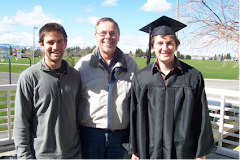
Early in the cancer journey, we feared that Susan might not even live long enough to make Patrick’s high school graduation in 2005. But of course she did – and almost made it to his college graduation – which was the day before this past Mother’s Day, 2009. Jon and I watched Patrick take a trip down the aisle with his class in commencement ceremonies at Montana State University – and Susan was there too. (He will officially finish in December after student teaching this fall.) Neither Susan nor I were ever particularly enthralled with big commencement events and Patrick was of the same mind. But such milestones have become more important to us and Patrick agreed to participate in honor of his mother. Ever the great planner and role model that she was, she had written a letter for the occasion which I gave to him the night before. Jon, Patrick and I enjoyed each other’s company in Bozeman (a great college town), then loaded up Patrick’s stuff for his return to Denver and a major lifestyle change.
Two days later, and a little over a year after putting his life on hold to be Susan’s caregiver, Jon proceeded with his plans to pursue international service. After a 52 hour trip, he is now at a volunteer center in Kenya working with kids in a small village (his blog address is: http://www.woeai.blogspot.com/). He’ll be back in Denver on July 31. Shortly after that, the three of us plan to take a trip to Downers Grove to visit Susan’s family. Then Jon will be off to China in late August where he’ll study Chinese and teach English at Chongqing Three Gorges University. Naturally, I have a trip to China in mind some time after the first of the year!
The trip theme continued last Saturday when I attended a memorial service conducted by the hospice that cared for Susan. They were honoring those for whom they had cared over the last year or more. The staff emphasized what a privilege it had been for us to allow them into such an intimate part of our lives. The service ended outdoors (on a gorgeous spring day) with the release of white doves, one for each honoree. It was symbolic of Susan’s trip across the threshold to that beautiful paradise we all hold in our hearts.
Several of us will be taking a “trip” back to the Montview Garden Columbarium this Memorial Day weekend to place a Butterfly Plant near Susan’s crypt. It was one of her favorites and it seems fitting to have it there, reminding us of the circle of life and death and life again.
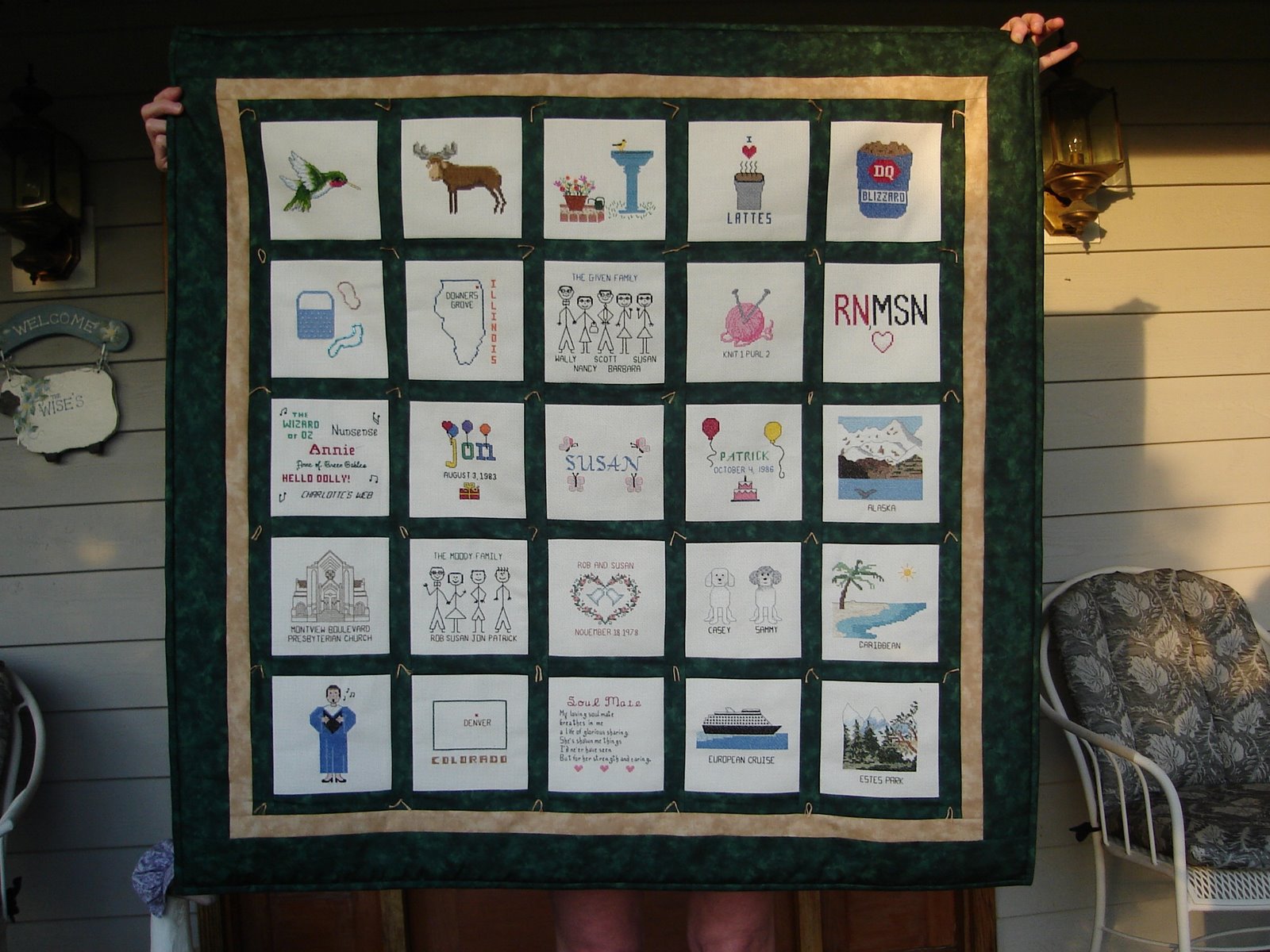
All of this reminds me that our trips, excursions, expeditions, jaunts, and journeys are an important part of the fabric of our earthly life. They’re helping me stitch together that huge whole she left in our lives with a unique pattern and texture that is shaped just like her.
Sunday, April 19, 2009
Foresight and Style
Among the many incredible gifts Susan left us was her foresight about what we would need after her death. Her long journey allowed her lots of time to contemplate those needs. Some of the initiatives she took were in partnership with me – such as remodeling the house and minimizing the attention it would require for a while. But she did other things that, even though I might have been aware of them taking place, are only having their impact now. In addition, she taught me how to be more proactive, to look ahead, anticipate, and prepare for things that were never on my radar screen before.
She had an extensive wardrobe. To be more direct, she was a self-admitted clothes horse. But she also had a great sense of style which not only kept her well-dressed, but also kept me from looking like a clueless geek (at least in the eyes of most, I hope). Packing for any trip, no matter its length, was an obstacle course of decision-making for her, complicated by the choices she had. Which shoes should I take with which slacks and which tops? Are we going to any dressy places? What if it rains or snows? What if . . . ? It always took her hours to pack and she was always mildly chagrined that it generally only took me about 15 minutes or less.
Because of steroid-related weight gain, much of her earlier wardrobe became unwearable. Throughout 2008, and to spare me from having to do it, she and her friends worked hard to go through everything and give away most of what she no longer needed. In one particularly meaningful time period last fall, her sister Barb came for several days to help. It was an emotional time and they were as close as I’ve ever seen them, making it a meaningful step in the dying process as well as an exercise in practicality. I will be eternally grateful for Susan’s proactive nature.
There were still a lot of clothes (and shoes) left after she died. After several months of not being ready, I finally decided that the time had come to deal with them. I asked Peg to help – because I knew Peg would take charge, make me her assistant, and tell me what to do. She'd already helped Susan with the bulk of her earlier giveaways in 2008. The act of handling and recording the items as we categorized them was not in itself particularly difficult. But it set the stage for a conversation that we had not been able to have since Susan died. Peg was the first one on the scene just minutes after Susan took her last breath. Like so many others, she had spent time with Susan in the prior weeks and had gained some pretty incredible insights. Discussing those was an emotionally cleansing experience for both of us. I realized in talking to Peg, that Jon and I (and Patrick when he was here) were so busy being stressed-out, exhausted caregivers, that we were unable to appreciate any of the beauty and mystery of her dying process. As a result, I intend to circle back with others who spent special time with her during those final weeks. I think it will help me appreciate a more beautiful picture than the one we saw at the time – and I hope it will be good for them too.
There continues to be no particularly good answer to “how are you doing?” Everything I’ve read about the grieving process indicates that it takes its own time – and I’m finding that to be true. I do feel progress. But almost the moment I acknowledge it, something else reminds me of all that has transpired and I realize there is much more healing to come. It’s a little like hiking in the mountains or in a very hilly area. Just when you think you’ve reached the topmost peak and expect to see a panorama of the world, you discover that there are other, sometimes higher peaks that are still obstructing the view you were hoping to see. I have to remind myself that it’s still a beautiful view, made so by all of the caring, supportive people around me who seem to understand what I’m experiencing.
One of my “summit” moments was particularly remarkable – at least to me. I’m sure only a few people would truly understand it or not think I’ve gone wacky. It was the morning of March 31. I was on my way to work by train. I had finished reading my newspaper and was sitting quietly, aware of the rising sun over my right shoulder and appreciating the beauty of a spring morning in Colorado. I must have been thinking about her because I suddenly felt Susan’s presence leap into the huge hole that her absence has left inside me. At least that’s what it seemed like. The feeling was pleasant and comforting. It stayed with me for most of the day and made me feel like she was intimately close rather than in some elusive, external place waiting to be discovered. In retrospect, it almost seems silly – except for the impact it clearly had on me at the time and the way in which I remember the moment. Part of my awareness that day was a deep sense of appreciation for the courageous and dignified way in which she chose to live with that terrible disease. I’m so impressed with all the things she did for us in preparation for her departure in spite of what she was experiencing herself. I was also aware of the reality that she will always be with me – just not in the way in which I yearn to be.
So – how am I doing? Some days are OK. Some days it seems unbelievable that she’s gone. Every now and then I have a rare melt-down. But the reminders of her wonderful life are everywhere.
And somewhere in the world beyond, she is a model of foresight, organization and style – making things ready for us when our time comes to join her.
Wednesday, March 11, 2009
Untangling My Strands of Yarn: Reflections On Grieving
It’s been almost three months since Susan died. I’ve been wanting to post my thoughts during that time but I haven’t been able to get them out. I think I finally figured out why. The other night it came to me just before I went to sleep.
In the last few years of her life, one of the things that brought Susan great joy was knitting. Some of you have artifacts of her work, and some of her work is yet to be discovered by future grandchildren or others at some other time. She was prolific until the last couple of months, often working on multiple projects simultaneously. Occasionally, when she picked up a project that she had set aside, she’d find the yarn in a tangled mess. The tangles were particularly difficult when she was using more than one yarn at a time and knitting them together. She would often enlist my help in getting the yarn(s) untangled so she could proceed. This recollection has become a metaphor for my grieving process. My thoughts and feelings have been in a tangled mess, needing some time and patience (and help) to get untangled. The eventual result of Susan’s untangled yarn was always something beautiful – and useful. And so it is that I hope the path of this grieving process will take me to a beautiful, more comfortable place of reconciliation, where more recent events are overwhelmed by memories of our entire 30-plus years together.
My tangled feelings have evolved over the weeks. I felt pretty much OK in the first week or two after her memorial service. Patrick went back to school and Jon was in Uganda, so I had time for introspection. I went back to work and choir and felt more or less normal. But then I began to notice myself wanting to talk to her, to share some story, thought, or event – only to be disappointed at the realization that she wasn’t there. I’d roll over in bed and be surprised to find her gone. Gradually, it began to sink in to my psyche that her physical absence is permanent and that I have work to do in order to get used to it. There are so many things I’d like her to know. They’ve been so snarled up in my head that I didn’t even realize I was experiencing so many different feelings. These are the strands of my tangled yarn:
First of all, the memorial service was incredible. There were somewhere around 400 people in attendance, including a huge family turnout (both from her side and mine) as well as friends and colleagues from our life together and from our respective professional lives. I was particularly gratified by the showing of so many people from my work community – many of whom I would not have expected to take the time to come. Susan’s pre-planning paid off in a big way. It was not only a fine tribute to her, but also a celebration of our humanness as a community. Our friends who spoke or read or sang or played really poured their hearts into it.
There are still lots of tasks to complete. Part of me wants to wave a magic wand and take care of them right away. But part of my growing realization is that the important stuff will get done, the less-important stuff will get done in its own time, and the stuff that doesn’t really matter will eventually fade from my concern. There are of course the financial details and the legal records that must be completed and changed. I’m finally getting near the end of that. Then there is the disposition of Susan’s belongings and figuring out how to run the house. There are so many things she did that I either quietly appreciated or took for granted – but that I am otherwise clueless to replicate. My colleagues at work now have to point out things like the stain on my shirt that Susan would have caught before I left the house! Part of the loss is knowing that many things won’t be done, or won’t be done in the same way. And all of this is taking longer than I ever would have anticipated.
I’m occasionally having what I can only describe as some degree of post traumatic stress disorder. The final five weeks or so were incredibly intense. I sometimes have flashbacks of both the more difficult and tender moments. The night she got so upset and belligerent and wanted to “go home and find her husband” sticks out as bittersweet. The morning she silently placed her hand on my cheek while we gazed into each other’s souls is a treasure. Remembering what she went through is agonizing. Remembering her when she finally let go is indelible.
Then there is the big hole in the fabric of our lives. Her absence is palpable and I miss her terribly. I yearn to interact with her. I try to talk to her at her crypt. Yet, she’s still here in some way – the chills I experience, the dreams I have, the hummingbird images I notice, and the things that remind me of her must all be evidence of her presence. Somewhere along the way it became clear to me how strong our life partnership was and how challenging it is to function without her after 32 years of doing virtually everything together. Sometimes I feel at a loss to make a simple decision because she’s not here to consult. Other times I realize how liberating it is to make decisions for myself and then feel a brief sense of guilt at the realization that she might have preferred something else. Not being in partnership with her is going to be a hard habit to break.
I’m struggling to keep the entire 32 years in perspective. I have difficulty remembering what life was like before cancer. And yet the cancer journey, particularly the way she handled it, became such a defining aspect of her and our partnership. How can such a curse, such a scourge of the human experience also provide such growth and enrichment?
It has not escaped my attention that we’re all grieving together and that everyone who cared about Susan is experiencing something proportionate to her place in their lives. I’ve had lots of conversations with lots of friends and family. Everyone is taking good care of us and each other. Our good friend Susan (TOS or “the other Susan” as we joke) loaned me a really good book of meditations on grieving. (I’ve referenced it under “Good Books to Check Out”.) All of these things reaffirm what I know to be true: we’re going to be OK. People have been walking this path ever since humans have had the capacity to feel. We’re doing what we’re supposed to do and all is right with the universe.
My yarn feels a little less tangled and I’m hopeful that we can eventually knit something beautiful to fill that big hole in the fabric of our lives. I hope your grieving process is moving in that direction too.
Wednesday, December 17, 2008
New Beginnings - For All of Us
The Susan we knew and loved passed away today. Her long journey is finally over and we are confident that she is at peace. It’s important to note that she did not “lose her battle with cancer”. She beat cancer years ago when she chose quality over quantity of life and lived with the disease far longer than expected. Indeed, her life is nothing short of a triumph. Now we all embark on a new journey – life without Susan’s presence, but with the memories of her that have shaped our lives. Her obituary will read something like this:
Susan G. Moody was known for her zealous effectiveness in everything she sought to accomplish. It was therefore no surprise to anyone who knew her that she lived a full life for more than four and a half years after being diagnosed with terminal stage IV melanoma. Her cancer journey was characterized by her ardent emphasis on the quality of life, not its duration. She died in her home on Wednesday, December 17, 2008 in the presence of loved ones.
Susan, 55, and who lived in Aurora, Colorado was a retired Community Health Nurse Manager. She held two bachelor’s degrees (Zoology and Nursing), two certificates (Medical Technology and Science Education), and an honorary master’s degree in Nursing Leadership bestowed by Regis University in 2004 when she fell just short of completion due to her illness. She began her professional life as a medical technologist for 15 years followed by brief service as a public school science teacher. But her true passion was in public health nursing where she became a subject matter expert in women’s health issues, especially for the under-served population. After first working in the Chicago area where they lived for eight years, she and her family moved back to Colorado where she worked for the Tri-County Health Department for several years before joining MCPN (Metro Community Provider Network) as a Clinic Operations Manager.
Susan was an avid gardener, knitter, jewelry maker, seamstress, reader, and singer. She was a soprano soloist in the Westminster Choir at Montview Boulevard Presbyterian Church, a member of a jazz/gospel ensemble group known as “The Stage Crew”, and appeared in numerous musical productions over many years. She was also an Elder in the Presbyterian Church USA and was elected to Montview’s Session. She served on a committee of the Diana Price-Fish Foundation, a cancer support organization; and on the board of Self Improvement Opportunities, an adult education provider where she also tutored GED students.
Susan married Rob Moody in November of 1978 after meeting him through her sister in 1972. Together, they raised two fine sons, Jon age 25 and Patrick age 22 both of Aurora. Besides her husband and sons, she is survived by her parents, Wallace and Nancy Given of Downers Grove, Illinois; a brother Scott Given also of Downers Grove; and her sister Barbara Wise of Hampshire, Illinois. Her extended family includes numerous cousins, nieces, and nephews.
A memorial service will be held at Montview Boulevard Presbyterian Church, 1980 Dahlia Street in Denver where she will be interred in Montview’s Memorial Columbarium. Memorials and contributions can be made in her name to:
Montview Blvd. Presbyterian Church Music Program
1980 Dahlia Street
Denver, CO 80220-1239
Visiting Nurse Association Hospice at Home Program
Attention: Bob Crump-Bertram, Chaplain
390 Grant Street
Denver, CO 80203
The Melanoma Research Foundation
170 Township Line Road, Building B
Hillsborough, NJ 08844
Wednesday, November 26, 2008
For Real
On Thursday, November 13th, Susan had a significant new pain crisis that has turned the page on a new chapter of this journey. The standard treatment for pain of course, is to increase pain medication, in this case morphine. The hospice philosophy, which is all about comforting the dying, accepts no excuse for pain. Pain interferes with the important emotional and spiritual work that is being done in preparation for the transition out of this life. The tradeoff with pain management is sleep.
So Susan has been more asleep than not since that Thursday night. Even in wakeful times, she’s still in a world of her own. But she’s perfectly aware of what’s happening and has grown in her level of acceptance. The reason for the pain is undoubtedly disease progression, which means we’re getting yet closer to the inevitable beginning of a new journey for her as well as for the rest of us. Underscoring that reality has been the breathtaking speed of change in the household. Suddenly, we have a hospital bed in the living room, and we’re using more oxygen. Jon and I are taking turns eating and sitting with Susan who is essentially uninterested in food and no longer able to sit at the table. One of us sleeps in the living room with her at night. We have meals and pastors, and professional caregivers coming and going on a regular basis. Friends and family are right here with us both physically and spiritually. Sponge baths and changing the bed and lots of laundry are now the norm. Susan hasn’t been upstairs since Saturday morning because getting her up and down stairs has become too adventurous. Her favorite recliner in the family room seems like a distant memory. Just in the last few days, our lives have been transformed into the picture of in-home hospice that many of us probably imagine – and maybe dread. She has swiftly become bedridden and dependent on us for nearly all of her needs. Susan and I have discussed this picture many, many times over the last 4 ½ years – and here it is for real.
A wonderful friend of ours, Helen, offered an amazing metaphor to all of this. Helen suggests that Susan is in labor again. But this time it’s to give new life to her soul as her body dies. As I was sitting in the living room reading and contemplating our circumstances, trying to decompress from all of the new stressors that this has produced, I suddenly became keenly aware of what in-home hospice is all about – and it’s a lot like trying to make childbirth as comfortable as possible in familiar surroundings. Much of the stuff you’d expect in a hospital room is right here in our living room. We even have one of those over-the-bed tables on wheels that can be raised and lowered and upon which hospital meals are served. But it’s still our living room – with new meaning to the term “living” – not a stark, unfamiliar, and unpleasant place. I’m reminded that most of the literature we’ve read about the hospice movement emphasizes that dying is actually part of living – for all of us. We need not treat it as a failure of some sort. Doesn’t it make more sense to acknowledge its reality and deal with its inevitability by exercising as much control over it as we can? Prior to “modern” medical technology, isn’t that what people used to do? Die at home? Give birth at home? Susan occasionally wakes up, looks around, makes an observation, and resumes her slumber. The other day she commented “we have a nice living room!” Point made.
Jon’s prior CNA experience in a nursing home has proved to be invaluable. He’s teaching me all the tricks. But the new chores that Jon and I have taken on are unpleasant and exhausting – and not just for us. Susan, even though she’s not the same coherent person we’ve known, clearly doesn’t like any of this either. We had hoped to avoid this stage. But the fact that we’ve had so much time to prepare for this is a gift. We’ve read a great deal about hospice and the dying process – and I’m beginning to understand why it can be an honor to be a caregiver to a loved one.
Uncertainty is still part of the process. Though things have changed rapidly in the last 13 days, we still don’t know when she will be able to let go. She doesn’t either. We only know we’re closer than we were before. Patrick was here for a few days last week and will return for the Thanksgiving break. Instead of the usual Thanksgiving custom, the four of us will be giving thanks in a very special and memorable way – for the gifts of life and love, and especially for the extraordinary legacy of Susan Diane Given Moody.
Sunday, November 9, 2008
Urging Us On
When I was about 15, I walked the Lincoln Trail as a boy scout. The Lincoln Trail retraces the path that Abraham Lincoln walked between Springfield, Illinois where he was studying law and New Salem where he was living in the mid 19th century. It’s 20-plus miles – a pretty long trek for a youngster, especially if the youngster isn’t in the best of shape. But my brother and my cousin had both done it and I wanted to do it too. Hiking the trail earns the scout a medal and a big sense of accomplishment. Besides being dead-tired toward the end of the long day, I remember feeling lonely during the journey, even though I was with a small group of others who urged me on. I probably wouldn’t have made it without that support.
This memory could be a metaphor for our cancer journey. Susan, Jon, Patrick, and I are all experiencing this trek in our own ways, and I think it feels a little lonely for each of us even though we have lots of people urging us on. I don’t know how people do this without the encouragement of others because getting to our destination is a long trek. As with many life experiences, hiking the Lincoln Trail must have been part of my preparation for this time in my life.
Lately, the show of support has been particularly evident from all of you. We’ve gotten loving, non-invasive messages in all kinds of ways and from all sectors of our lives. Some of the messages have become dependably regular and are our bedrock. Some of them have been unexpected and gratifying surprises. The number of people who are with us on this journey is astonishing, and humbling, and touching. It illustrates the best of our humanity as we travel the circle of life together. It is what will help us make it. In spiritual terms, all of you equate to the presence of God in our lives – and God is mightily present.
In the last month Susan has gone from what had been pretty stable pain control to sudden, severe new pain. After a couple of weeks of increased doses and being “out of it”, she seems to be in a little better control of the pain for the time being. Her memory and cognitive abilities are still pretty variable from one moment to the next. She struggles with the loss of function. We know pain management will be an on-going challenge. Stability and mobility are growing issues and all of us are fully exercising our coping skills as we strive to keep her safe, comfortable, and at peace with the situation. It’s already been a long hike and we don’t know how far we have yet to go. The sense of accomplishment we seek at the end will be helping Susan finish her earthly life in peace and comfort. But we’ll make it – because we have you urging us on. God is with us. Thanks be to God – and to you!
Sunday, October 5, 2008
Letting Go and Holding On
One of the challenges Jon and I have noticed about this journey as caregivers, is how very difficult it is to find the right balance between assisting Susan with a task and assisting her with her dignity. It’s very hard for Susan to let go of things that she can sometimes do, but sometimes can’t or sometimes shouldn’t. It’s usually little things – like carrying a glass of water around the house or a handful of stuff up and down the stairs. It could be something very important to her but not so much to us when we have so many other priorities on our minds. Sometimes, it’s no problem at all. Sometimes she can’t do it safely and knows it. Sometimes she can’t do it safely and doesn’t know it but Jon and I do. And sometimes we’re mistaken. Part of the dying process is learning to let go of things and we talk about that a lot. But as Susan points out, it can’t be done overnight, especially for someone who has always been so competent. Knowing exactly how best to get someplace or where to park doesn’t go away just because you’re not the one driving. Taking things away from her – even with all our good intentions as caregivers – sometimes results in some verbal wrangling, albeit brief, that only adds to the stress of it all.
I think parents and teachers get lots of practice at the process of helping, then letting go as children grow, develop, and master new things. Experiencing that is both scary and rewarding. But this is just the opposite. We’re not talking about someone’s development; we’re dealing with someone’s decline. We’re not the ones letting go – she is. I noticed the same difficulties when my sister was the primary caregiver to our mother. The caregiver wants to help, to take annoying tasks away, to keep the loved one safe, and to balance all of that with whatever the caregiver needs to do for himself. But the loved one wants to reaffirm her own value as a competent human, to offer thoughts, ideas, and expertise in the activities of daily life no matter how trivial. It turns out that helping someone who is not always helpless is a steep learning curve.
Because of Susan’s decline, it’s very difficult to tell from one moment to the next if we’re dealing with a sharp, rational thought process or if we’re dealing with the effects of the brain tumor. She is often confused and frequently has trouble converting her thoughts to the right words – but not always. Short-term memory is a big problem. In addition, her mind is tormented by an overwhelming, sometimes anxiety-producing flood of thoughts. Some of those thoughts are constructive, accurate, and right on the money. Sometimes they’re not. Often, they are things we don’t think she needs to worry about. But when we step in to rescue her from being a hostage to her own unnecessary control needs, we sometimes get a backlash because she’s unwilling or unready to give up the dignity of having thoughts and choices. It’s very stressful and takes a lot of energy for the caregiver to figure out the right response. In fact, it’s probably impossible – which adds an element of guilt for not getting it right.
Her decline is more and more obvious. For several weeks, pain management has been a growing issue. We’re constantly trying to determine how much regular, baseline pain medicine she needs in order to avoid too much breakthrough pain yet not so much that she falls asleep in the middle of a sentence. The more morphine she takes the more cognitive function she gives up. The less morphine she takes, the more she’s in pain. Her balance and mobility are much worse. She uses a walker more and more, even in the house. Her risk of falling is considerably higher. She uses oxygen occasionally for shortness of breath (that was particularly handy for our recent visit to the higher altitude of Estes Park). And yet she continues to formulate future plans and future projects and hold on to as much as she possibly can. It turns out that the dying process is much more complicated than I ever anticipated, even though we’ve been informing ourselves about it for years.
How will Susan know when it’s time to let go and die in peace? How will the rest of us know when to signal to her that it’s OK? There is only one answer that consoles me: We have to let go of our human concerns and hold on to our faith in God, Nature, the Divine, or whatever superior force we rely on to help us cope with life’s challenges.
Let go – but hold on. It takes a lifetime to master.